








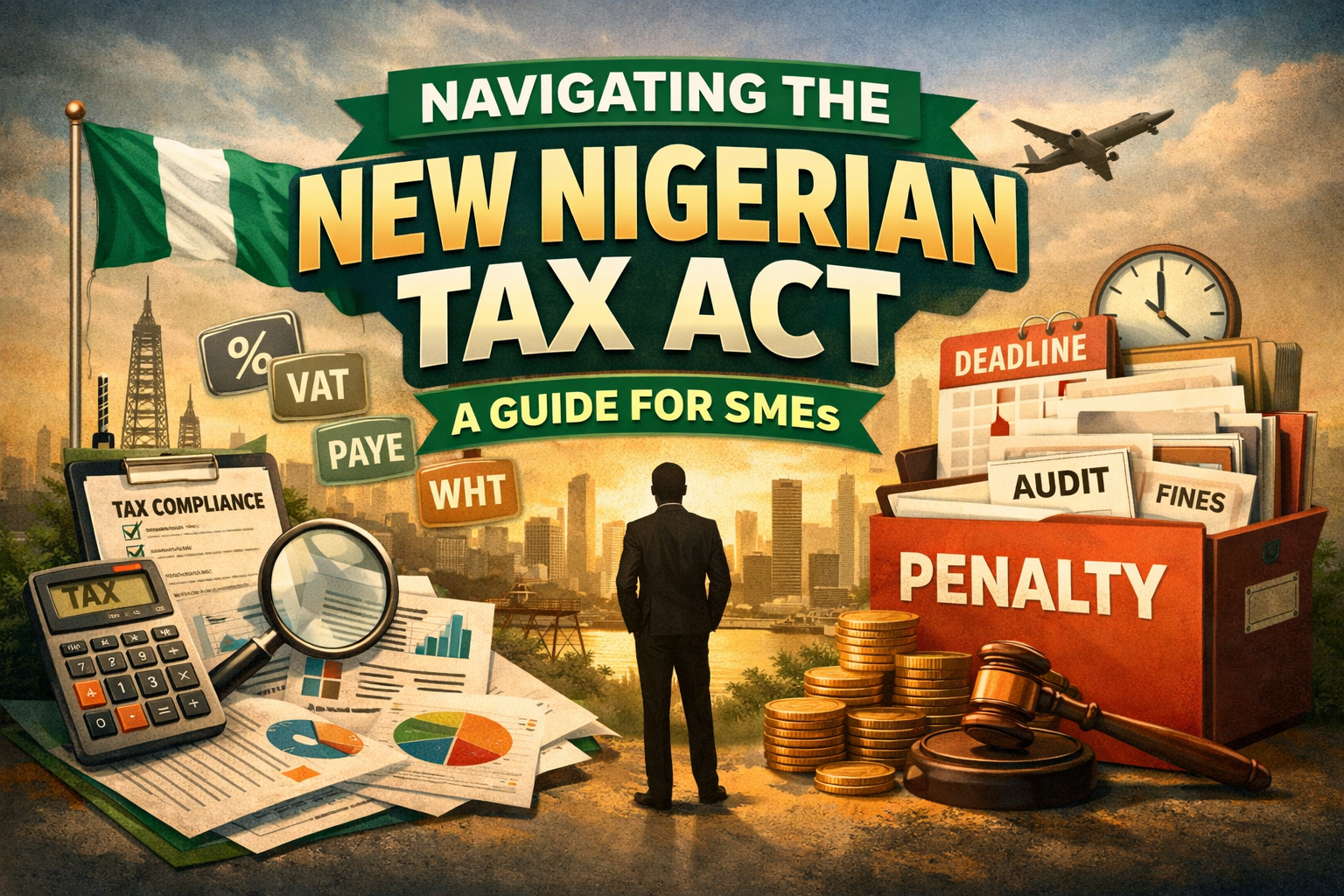
What the New Nigerian Tax Act Means for SMEs in 2026
Introduction
The introduction of the New Nigerian Tax Act represents one of the most significant tax reforms in recent years. For small and medium-sized enterprises (SMEs), these changes could affect tax liabilities, compliance requirements, and financial planning strategies in 2026 and beyond.
Understanding these reforms early is critical for avoiding penalties and maintaining healthy cash flow.
Key Changes
Some of the most important updates under the new Act include:
- Adjustments to corporate income tax thresholds
- Revisions to VAT administration and reporting
- Changes to withholding tax mechanisms
- Stricter compliance monitoring by tax authorities
- Updated penalty structures for non-compliance
These changes aim to improve transparency, increase revenue generation, and strengthen tax administration efficiency.
Who Is Affected?
The reforms affect:
- Registered SMEs
- Growing startups transitioning from small to medium scale
- Companies engaging in cross-border transactions
- Businesses operating in VAT-liable sectors
- Employers handling PAYE and withholding obligations
Even small businesses previously considered low risk must now ensure full compliance.
Compliance Implications
The new regime places greater emphasis on:
- Accurate record-keeping
- Timely tax filings
- Digital tax administration
- Proper classification of income and expenses
Failure to comply may result in:
- Monetary penalties
- Interest charges
- Tax audits
- Business disruption
Action Steps for Businesses
To prepare for 2026:
- Review your company’s tax structure
- Conduct a tax health check
- Update bookkeeping systems
- Reassess VAT and withholding tax procedures
- Seek professional tax advisory support
Early preparation reduces risk and positions your business for stable growth.
Conclusion
The New Nigerian Tax Act is not just a regulatory change; it is a shift toward stricter compliance and improved tax governance. SMEs that prepare early will avoid penalties and gain strategic clarity.
Need help navigating the new tax regime? Contact our firm today for a compliance review.
2. Major Changes Introduced by the New Nigerian Tax Act
Corporate Income Tax Adjustments
The new Act introduces revisions to corporate tax thresholds and compliance expectations. Businesses must carefully assess:
- Applicable tax rates
- Qualification for small company exemptions
- Taxable profit calculations
- Documentation standards
Proper tax computation is now more critical than ever.
VAT Updates
Changes to VAT administration may include:
- Updated registration requirements
- Digital filing expectations
- Expanded VAT coverage in certain sectors
- Increased enforcement
Businesses must ensure VAT returns align with statutory requirements to avoid exposure.
Withholding Tax Changes
The reform may adjust:
- Withholding tax rates in specific industries
- Reporting procedures
- Remittance timelines
Incorrect deductions or late remittance can attract penalties.
Filing Deadlines
The Act reinforces strict adherence to:
- Annual corporate tax filings
- VAT monthly returns
- PAYE remittances
- Withholding tax submissions
Missing deadlines now carries increased financial consequences.
Penalties
The updated penalty regime is designed to:
- Deter non-compliance
- Encourage voluntary disclosure
- Strengthen enforcement
Penalties may include fines, interest charges, and audit exposure.
Conclusion
Businesses must reassess their tax processes immediately. The cost of non-compliance is significantly higher under the new Act. Schedule a tax compliance review with our team today.
3. Top 5 Mistakes Businesses Will Make Under the New Tax Act
1. Assuming the Changes Do Not Apply to Them
Many SMEs believe reforms target only large corporations. This assumption can be costly.
2. Poor Record-Keeping
Incomplete bookkeeping increases audit risk and may result in estimated assessments.
3. Late Filing and Remittance
Delays in VAT, PAYE, or corporate tax filings can quickly accumulate penalties.
4. Misclassification of Income and Expenses
Incorrect reporting affects taxable profit and can trigger compliance reviews.
5. Ignoring Professional Advice
Attempting to self-manage complex tax reforms without expert guidance increases exposure.
Final Thoughts
The most expensive mistake under the new tax regime is inaction.
Proactive tax planning is now essential.
4. How to Prepare Your Business for the New Nigerian Tax Regime
Step 1: Conduct a Tax Risk Assessment
Identify potential exposure areas in:
- Corporate tax
- VAT
- Withholding tax
- Payroll compliance
Step 2: Strengthen Your Accounting Systems
Implement:
- Reliable bookkeeping processes
- Digital record management
- Proper invoice documentation
Step 3: Review Your Tax Structure
- Assess whether your company classification remains optimal under the new rules.
Step 4: Update Internal Controls
Ensure:
- Clear approval processes
- Accurate tax calculations
- Timely remittance procedures
Step 5: Engage a Professional Tax Advisor
- A structured compliance strategy reduces risk and protects profitability.
Conclusion
- Preparation is the difference between compliance confidence and financial exposure. The new Nigerian Tax Act rewards businesses that act early.
Contact us to help your business transition smoothly into the new tax regime.